
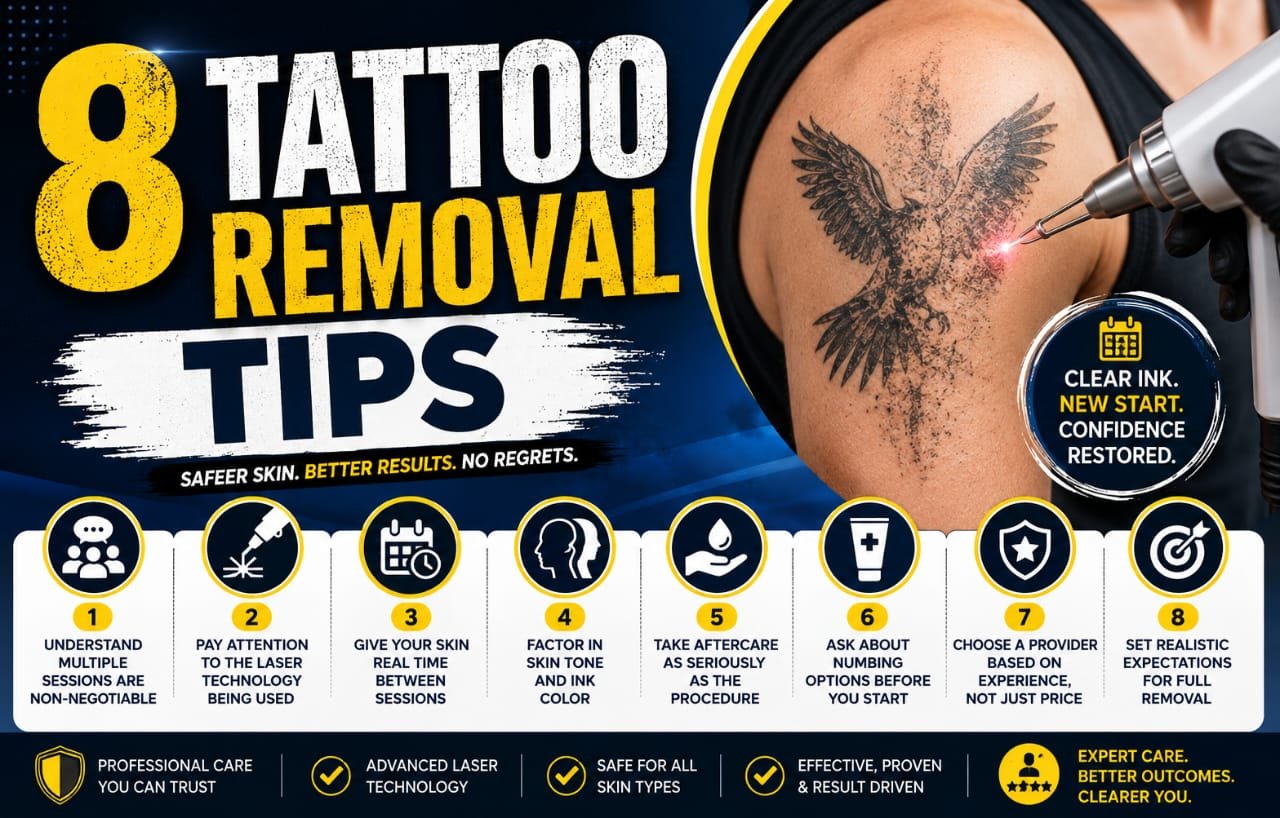
Tattoo removal has changed a lot in the past few years, and 2026 brings new laser technology, better aftercare protocols, and more realistic timelines for people who want ink gone for good. Whether you’re removing a name that no longer means anything, fading a tattoo for a cover-up, or clearing skin for a new job, knowing what actually works can save you months of frustration and hundreds of dollars. Here are eight tips worth knowing before you book your first session.
Understand That Multiple Sessions Are Still Non-Negotiable
Despite marketing claims about “one-and-done” treatments, most tattoos still require between 6 and 12 sessions to fade significantly or disappear. The exact number depends on ink density, color palette, and how deep the pigment sits in the skin. Black and dark blue inks respond fastest, while greens, yellows, and light blues often need extra rounds. Anyone promising full removal in two or three visits is either overselling results or working with a tattoo that was never heavily saturated to begin with.
Pay Attention to the Laser Technology Being Used
Not all lasers are created equal, and this matters more in 2026 than it did five years ago. Picosecond lasers, which deliver energy in ultra-short pulses, break down ink particles more efficiently than older Q-switched models and tend to require fewer sessions with less risk of scarring. Ask directly what type of equipment a provider uses before committing to a treatment plan. A clinic that can explain its laser technology clearly, rather than giving a vague answer, is usually a good sign of expertise.
Give Your Skin Real Time Between Sessions
Rushing sessions too close together is one of the most common mistakes people make. Skin typically needs 6 to 8 weeks to heal and allow the lymphatic system to clear out fragmented ink particles before another treatment. Going in earlier doesn’t speed up the process; it just increases the risk of burns, blistering, or uneven fading. Patience during the waiting period is just as important as the treatment itself.
Factor In Skin Tone and Ink Color
Laser removal interacts differently with different skin tones, and providers in 2026 are far more attentive to this than in years past. Darker skin tones require lower energy settings and longer wavelengths to avoid hyperpigmentation or scarring, while lighter skin tones generally tolerate a broader range of settings. Certain ink colors, like white, light pink, and neon shades, are notoriously difficult to remove regardless of skin tone. A qualified technician should assess both factors before recommending a treatment plan, not apply a one-size-fits-all approach.
Take Aftercare as Seriously as the Procedure
What happens after a session directly affects how well the skin heals and how effective the next round will be. Keeping the treated area clean, avoiding sun exposure, and skipping tight clothing over the site for at least a week are basic but frequently ignored steps. Sunscreen matters even on cloudy days, since UV exposure on healing skin can cause pigment changes that complicate future sessions. Ice packs and over-the-counter pain relief can help manage discomfort in the first 48 hours without interfering with healing.
Ask About Numbing Options Before You Start
Tattoo removal is often described as more uncomfortable than getting the original tattoo, since the laser targets deeper layers of skin repeatedly in the same spot. Many providers now offer topical numbing creams, cooling devices, or even injectable numbing for larger areas, and asking about these options ahead of time makes a real difference. Some people tolerate the sensation fine without any numbing at all, but there’s no reason to grit your teeth through unnecessary discomfort if better options exist. Discuss pain management during the consultation, not mid-session.
Choose a Provider Based on Experience, Not Just Price
Cost matters, but the cheapest option isn’t always the safest one when it comes to lasers interacting with skin. Providers with years of hands-on experience are better equipped to judge how skin will respond, adjust settings mid-treatment, and catch early signs of complications like blistering or infection. For anyone in the region searching for reliable, experienced care, the leading tattoo removal clinic in South Windsor, CT has built a reputation for combining updated equipment with technicians who understand how to treat a wide range of skin tones and ink types safely. Checking reviews, before-and-after photos, and technician credentials before booking is worth the extra time it takes.
Set Realistic Expectations for Full Removal
Some tattoos fade to a faint shadow rather than disappearing completely, especially older tattoos with heavy ink saturation or those done with amateur equipment that pushed pigment unusually deep. This doesn’t mean removal failed; it means biology has limits. Discussing realistic outcomes during the first consultation, including the possibility of needing a cover-up tattoo over residual pigment, prevents disappointment later in the process.
Removing a tattoo is a gradual process that rewards patience, research, and choosing the right provider over the fastest or cheapest option. Book a consultation before assuming anything about cost or timeline, since skin type, ink color, and tattoo age all shift the equation. Going in with realistic expectations and a solid aftercare routine will do more for the final result than any single session ever could.

David Harrison is the Founder of Bio Factz, dedicated to telling the real stories behind the screen. He delivers accurate, exclusive, and authentic biographies, plus the latest updates on your favorite internet personalities.